FY2024 Activity Achievements
| Environmental Vision | Initiative | Specific Activities | Selected FY2024 Achievements |
|---|---|---|---|
| 1.Develop products that contribute to environmental preservation | Develop products that contribute to the reduction of CO₂ emissions (electric products) | Product development for e-Axle (AC) | Development of electric pump for lubrication and cooling (pump + motor + ECU) |
| Development of electric pump unit (HC) | Concept study | ||
| Development of energy saving hydraulic excavator system (HC) | System design / control algorithm design, principle prototyping started | ||
| Development of electromagnetic proportional control valve (HC) | Production of electromagnetic proportional control valves for three-to-four-ton excavators Continued development on electromagnetic proportional control valve for uses other than excavators |
||
| Development of hydraulic cylinders for medium- and large-sized construction machinery (HC) | Achieved product weight reduction through a 20% decrease in cylinder tube wall thickness | ||
| Development of CAE technology with AI-based simulation of shock absorber damping force (AC) | Improved vehicle development efficiency by providing automotive manufacturers with a fast and highly accurate shock absorber model | ||
| Development of high-performance small-diameter inverted front forks for small motorcycles (AC) | Enhanced ride comfort by improving bottom-shock absorption performance by 30% | ||
| Develop products for a circular economy | Develop biodegradable hydraulic fluid (AC) | Continue supplying biodegradable hydraulic fluid for racing dampers Started mass production specification plans using knowledge and technology gained from competing in races |
|
| Optimum maintenance and breakdown prediction using sensors (HC) | Continued development on oil leak detection cylinder Continued development on oil condition diagnosis sensor/system |
||
| 2.Reduce environmental burden of products | Reduction of CO₂ in lifecycle | Calculation of CO₂ emissions | Calculated Scope 3 CO₂ emissions for 46 sites, including manufacturing and other facilities Obtained warranty from third-party verification |
| Reduction of CO₂ emissions from raw materials | Promoted electric furnace material supply Raised resin recycling rate |
||
| Cooperation with business partners | Share information on carbon neutrality initiatives | Conducted business partner survey on carbon neutrality awareness Conducted briefing and survey on CO₂ emissions survey Requested carbon neutrality efforts at purchasing policy briefing and other meetings |
|
| 3.Reduce environmental burden in monozukuri | Reduction of CO₂ in corporate activities | Made progress with switching company cars to EVs, promoted web meetings and remote work | |
| Promotion of energy conservation initiatives | Energy conservation initiatives according to the six rules | Weekend power reduction: CO₂ reduction of 1,236 tCO₂ Elimination of air leaks: CO₂ reduction of 977 tCO₂ Lowering compressor supply pressure: CO₂ reduction of 702 tCO₂ Thermal insulation of piping and tanks: CO₂ reduction of 264 tCO₂ Optimization of operating conditions: CO₂ reduction of 523 tCO₂ Conversion to LED lighting: CO₂ reduction of 306 tCO₂ |
|
| Promote capital investments in energy conservation | Production technology development | Increased speed of heat treatment (under development) Shortened coating dryingtime (under development) Reduced excess plating layers (under development) |
|
| Upgrade aging equipment | Gifu North Plant cogeneration system started: CO₂ reduction of 3,906 tCO₂ Renewal of aging compressors: CO₂ reduction of 96 tCO₂ |
||
| Renewal of aging production equipment | Energy saving and high efficiency equipment: CO₂ reduction of 221 tCO₂ | ||
| Promotion of renewable energy | Introduction of photovoltaic power generation system | Power generation of16,975 MWh: CO₂ reduction of 8,870 tCO₂ Country installed: Japan, Spain, China, Thailand, Vietnam, Malaysia, Indonesia |
|
| Promotion of resource circulation | Reduction of waster matter volume | Volume reduction of waste liquid from AL painting booths (KMS): CO₂ reduction of 0.67tCO₂ | |
| Promote recycling | Recycling of PET materials (Component trays) (Gifu North Plant): CO₂ reduction of 0.35 tCO₂ Reduction of waste through the return of used pail cans (Nagaoka): CO₂ reduction of 0.044 tCO₂ Recycling of waste plastics (Injection-mold scrap, PET trays, returnable boxes) (Kanayama): CO₂ reduction of 9.7 tCO₂ |
||
| 4.Environmental preservation activities | Offset through CO₂ absorption | Increase the volume of CO₂ absorption through planting trees | Tree-planting activities (Thailand, Indonesia, Vietnam, India, Czech Republic, Mexico) |
| Efforts to preserve biodiversity | Approval for initiative | Endorsed the Keidanren Initiative for Biodiversity since FY2023 | |
| Enhancement of habitats for wild birds | Installation of bird boxes (Czech Republic) | ||
| Conservation of near-threatened species Lespedeza tomentosa (Developmental Center) | Ongoing vegetation management and regular monitoring of habitat conditions (700 m²) | ||
| Protection of rare plant species (Indonesia) | Cultivation of multiple species of rare orchids within plant premises. | ||
| Composting of wood chips | Initiated pilot testing of composting wood chips produced from pruned branches. Application of the resulting compost is planned for rice and soybean cultivation fields in January 2025 | ||
| Donations for nature conservation | Contributions and sponsorships supporting forest conservation, biodiversity preservation, and broader environmental protection activities | ||
| Cleanup activities | Conducted cleanup initiatives around plant premises and surrounding green areas (two KYB sites and four Group company sites). | ||
| In-house education and awareness | Human resources training | Continued ESG training for all employees (FY2024 participants: 3,905 via e-learning; 1,883 via on-site group training) | |
| Continued offering environment-related elective programs as part of the corporate training curriculum (FY2024 participants: 143) | |||
| Educational and awareness activities | Provided ESG information on the intranet and in company newsletters | ||
| 5.Environmental management | Actively disclose environmental information | External evaluation | CDP score: B on climate change, B on water security Toyo Keizai CSR survey: 337th EcoVadis: 52% |
| Introduce environmental management | Obtainment of ISO 14001 certification | 100% of domestic companies and 94% of overseas subsidiaries (up 1% YoY) | |
| Legal compliance and prevention of environmental accidents | Management and reduction of environmentally hazardous substances | Zero prohibited substance use | |
| Environmental safety audits | Confirm the environmental activities of plants through environmental safety audits on 31 global plants |
Evaluation of FY2024 Activities
○:Target achieved ×:Target not achieved
| Global (KYB (seven plants), Consolidateed subsidiaries (six domestic, 18 overseas) |
KYB (seven plants) |
||||||
|---|---|---|---|---|---|---|---|
| Theme | Numerical target | FY2024achievements | Evaluation | Numerical target | FY2024achievements | Evaluation | |
| Climate change counter measures | CO₂ emissions | 200,098tCO₂ or less | 189,069tCO₂ | ○ | 94,220tCO₂ or less | 89,146tCO₂ | ○ |
| CO₂ emissions per basic unit |
(Ref.) 0.473tCO₂ /¥ million or less |
0.442tCO₂ /¥ million |
ー | (Ref.) 0.456tCO₂ /¥ million or less |
0.451tCO₂ /¥ million |
ー | |
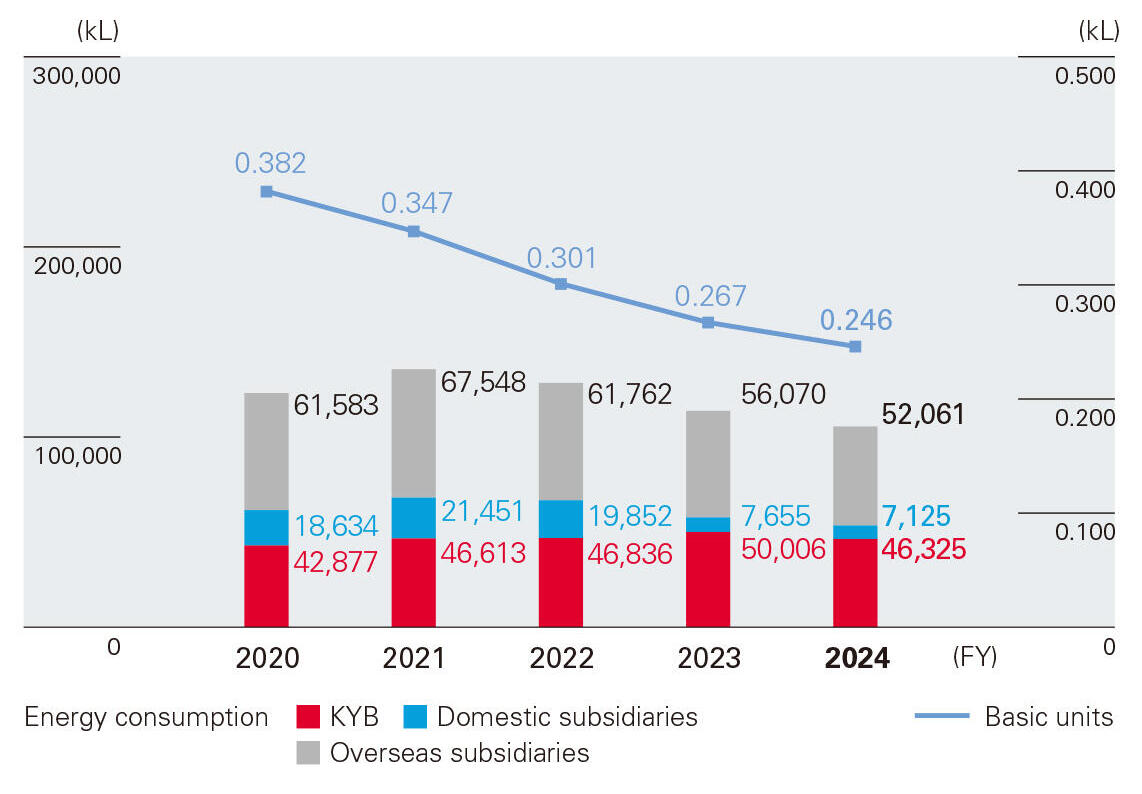
| Energy consumption | (Ref.) 125,907kLor less |
105,511kL | ー | (Ref.) 57,162kLor less |
46,325kL | ー | |
| Energy consumption per basic unit |
0.283kL /¥ million or less |
0.246kL /¥ million |
○ | 0.251kL /¥ million or less |
0.234kL /¥ million |
○ | |
| Reduction of industrial waste | General waste | (Ref.) 2,600t or less |
2,556t | ー | (Ref.) 453t or less |
377t | ー |
| General waste per basic unit |
6.10t /¥ million or less |
5.97kg /¥ million |
○ | 2.17kg /¥ million or less |
1.91kg /¥ million |
○ | |
| Metal scrap | (Ref.) 39,412t or less |
33,977t | ー | (Ref.) 20,566t or less |
17,164t | ー | |
| Metal scrap per basic unit |
88.5t /¥ million or less |
79.4kg /¥ million |
○ | 90.4kg /¥ million or less |
86.8kg /¥ million |
○ | |
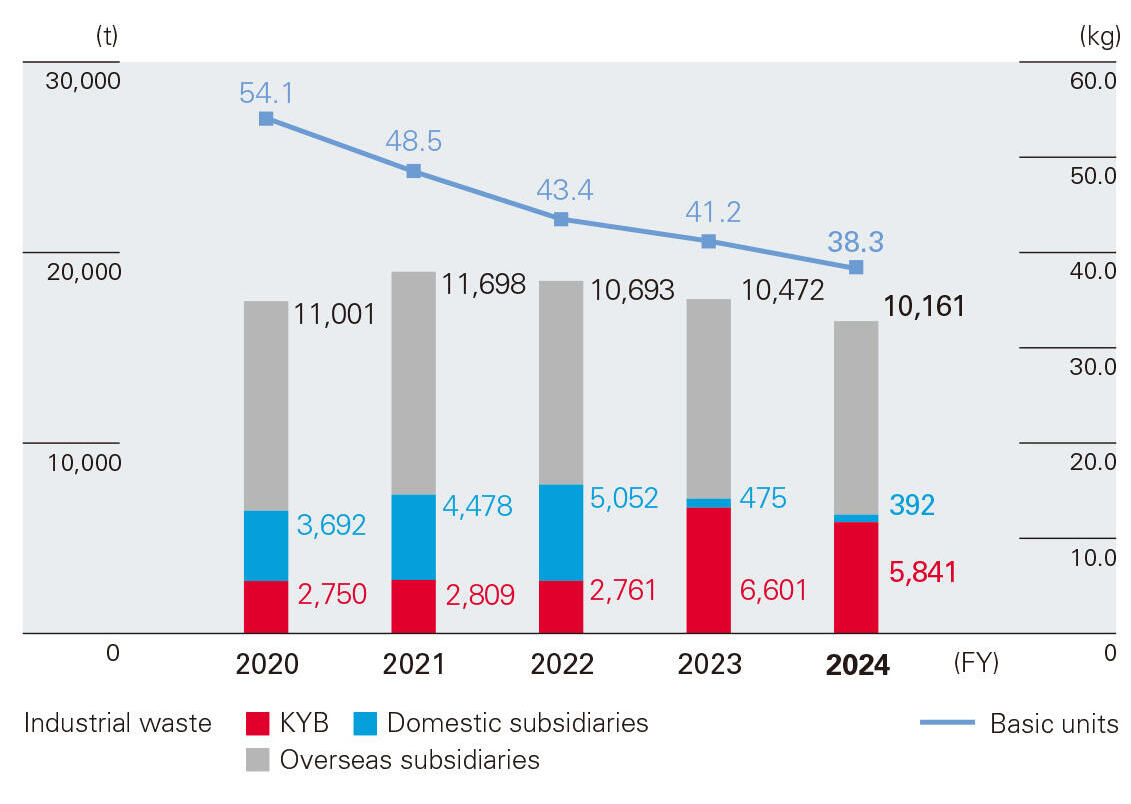
| Industrial waste | (Ref.) 18,167t or less |
16,394t | ー | (Ref.) 7,073t or less |
5,841t | ー | |
| Industrial waste per basic unit |
41.4kg /¥ million or less |
38.3kg /¥ million |
○ | 31.7kg /¥ million or less |
29.5kg /¥ million |
○ | |
| Plastic waste matter | ー | ー | ー | (Ref.) 469t or less |
495t | ー | |
| Recycling | Recycling rate | ー | ー | ー | 76.5%or more | 76.8% | ○ |
| Final disposal volume | ー | ー | ー | 2.2% or less | 2.7% | × | |
- Energy refers to the total of crude oil conversion, such as electricity and fuel. Regarding the decrease of industrial waste, the calculations exclude valuable materials (recycling or reuse) generated by initiatives to promote recycling. Output level are calculated based on KYB's regulations, which take shipping into account.
Resource Circulation and Consideration of Environmental Burden
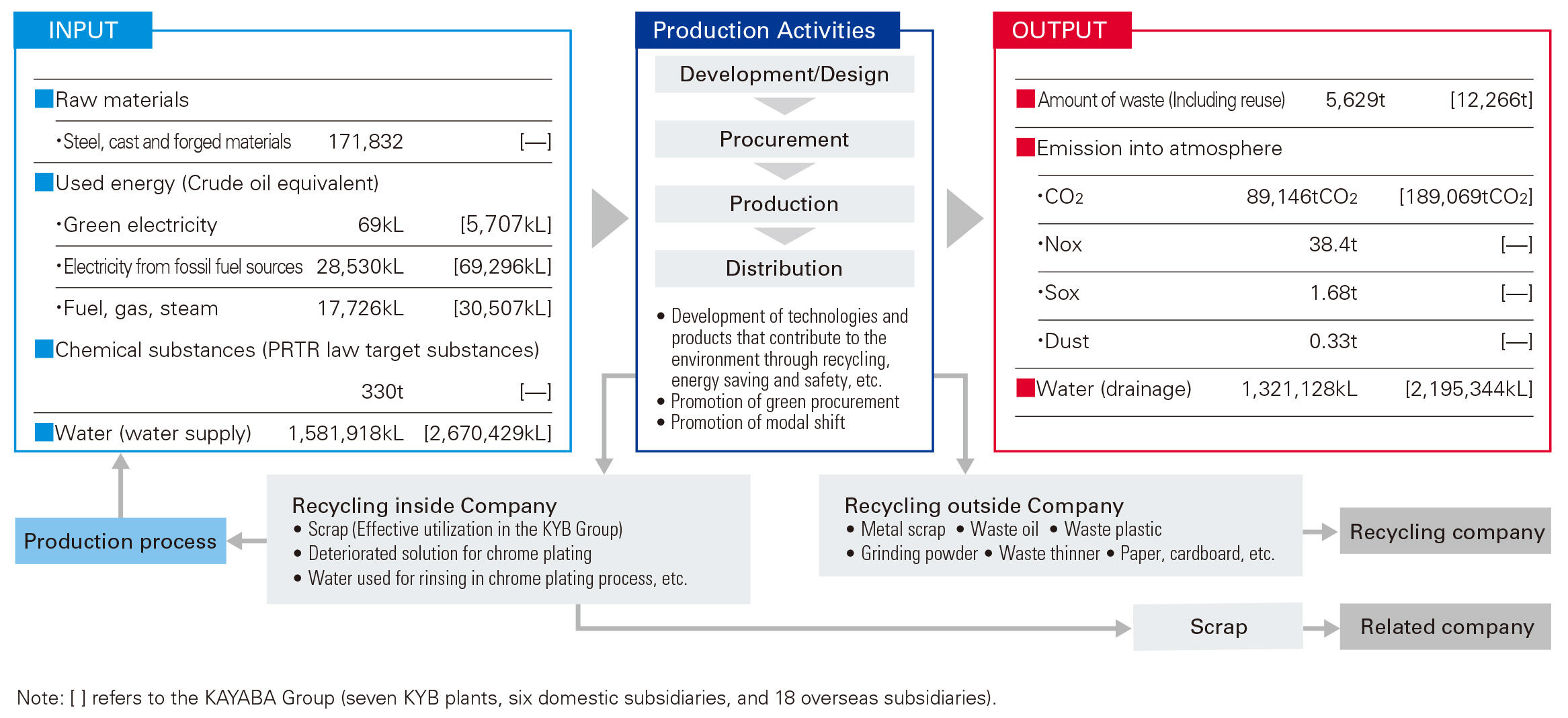
CO₂ Emissions
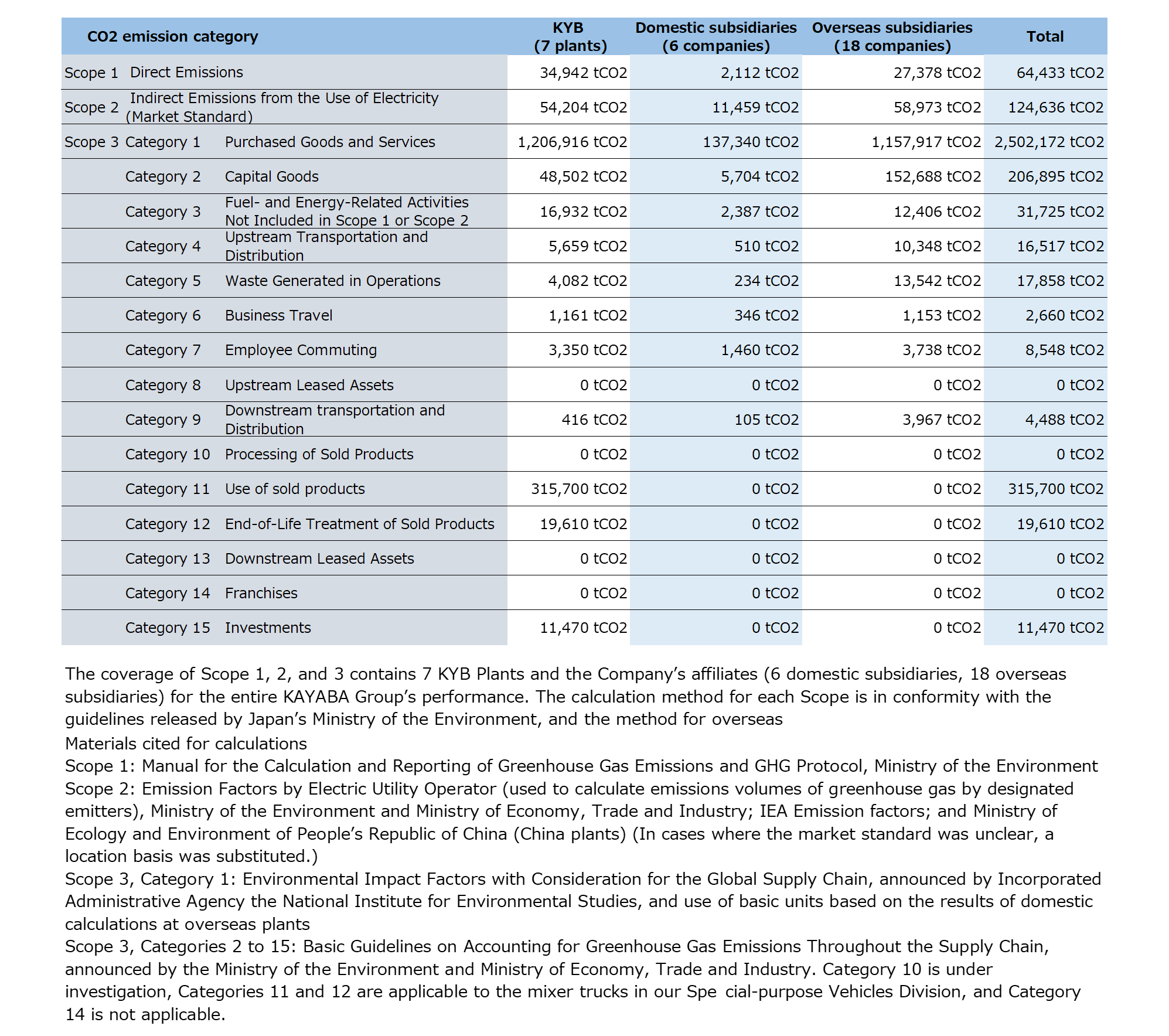
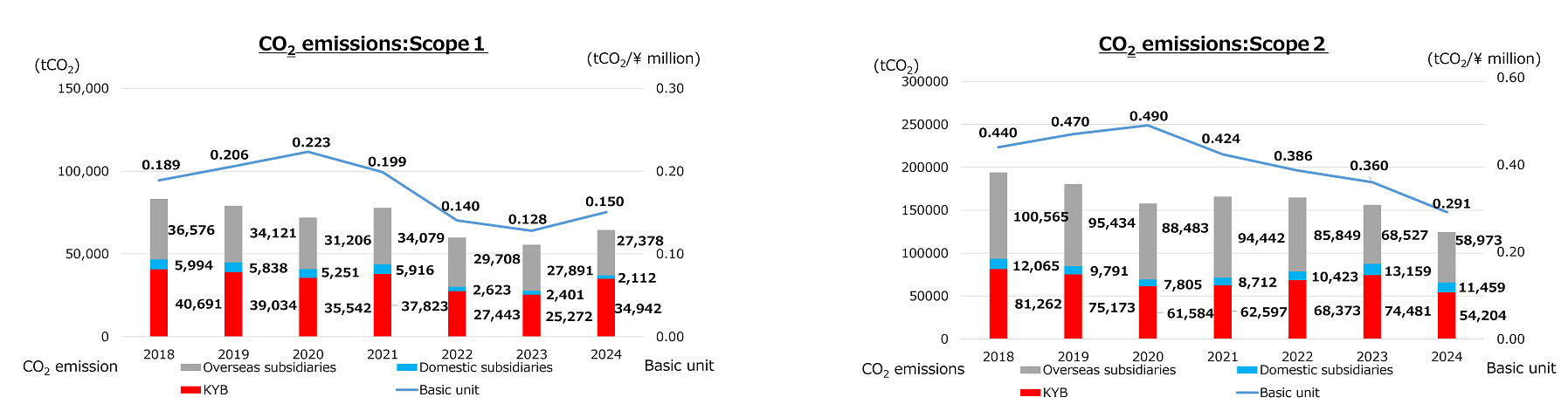
Examples of Our Efforts
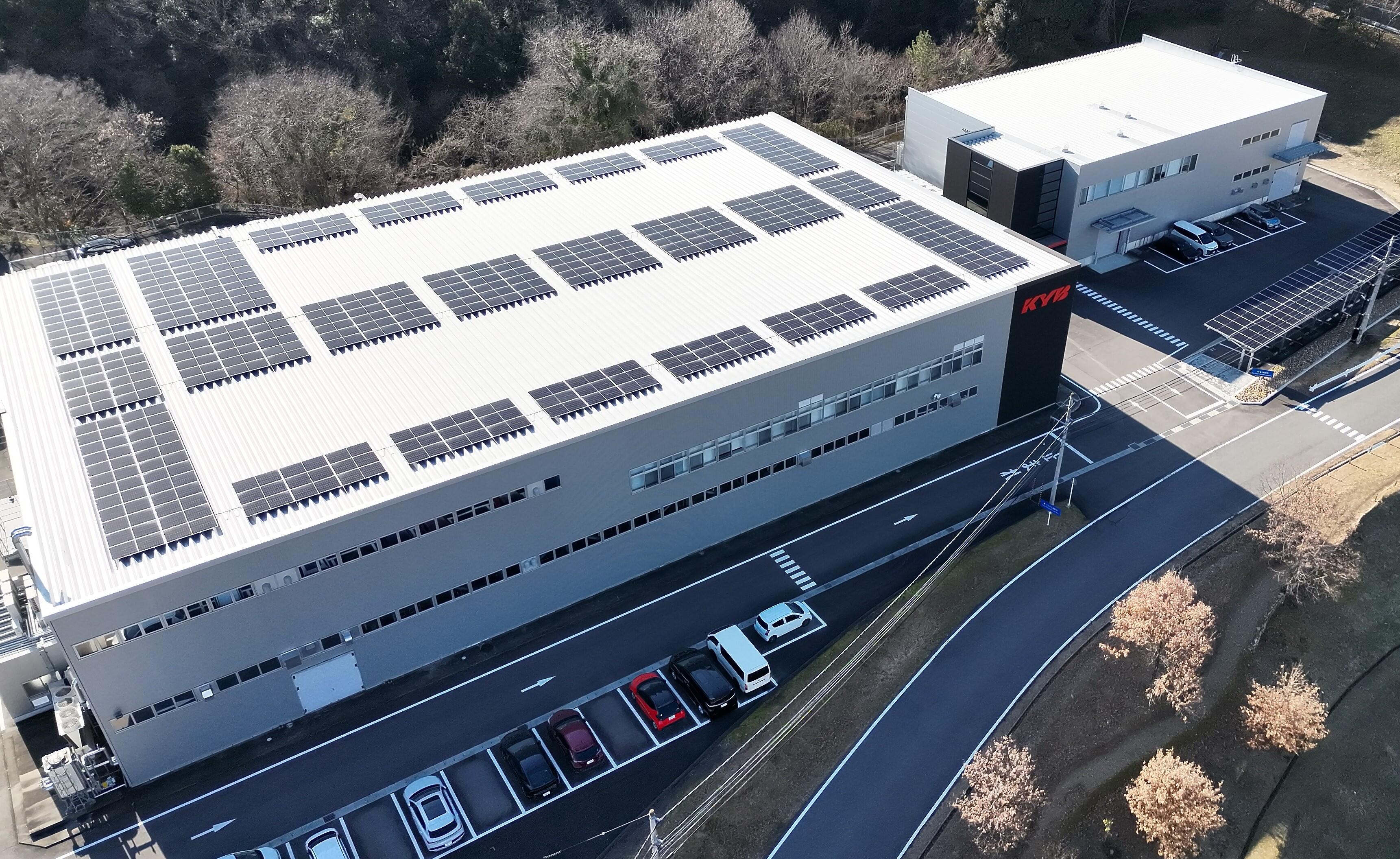
① Introduction of Solar Power Generation Systems (Deployment of Renewable Energy)
In Japan and Spain, we newly installed solar panels on the roofs of our factories and consumed all the electricity generated at those sites. As a result, the initiative led to a reduction of 44 tons of CO₂ emissions in fiscal year 2024.
② Purchase of Carbon-Neutral City Gas (Introduction of Green Energy)
Carbon-neutral city gas reduces CO₂ emissions by offsetting the CO₂ generated throughout the lifecycle--from natural gas extraction to combustion--using CO₂ credits*.
The Gifu Kita Plant has been supplied with this city gas by Toho Gas Co., Ltd. since March 2022. The CO₂ reduction effect for fiscal year 2024 amounted to 9,405 t-CO₂ per year. Since this city gas has not yet received formal certification, the CO₂ offset volume (Scope 1) is not included in our official calculations. However, we have adopted it as part of our commitment to contributing to a carbon-neutral society.
- CO₂ credits: Certificates issued by verification bodies that recognize CO₂ reduction achieved through environmental conservation projects around the world. These credits can be used to offset emissions generated during gas production and transportation.
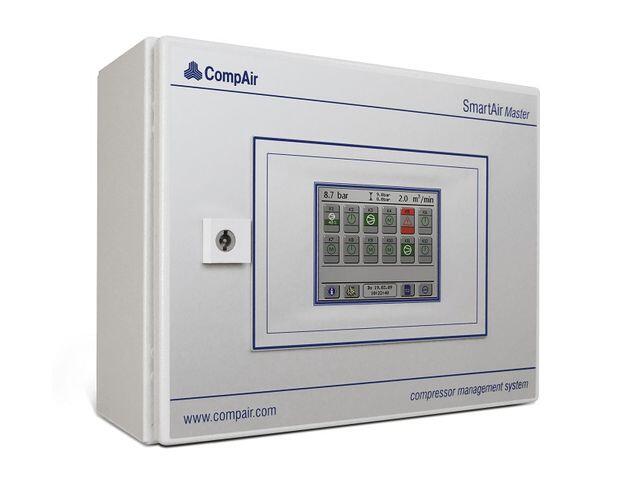
③ Introduction of Smart Air System (Malaysia: KMSB)
Previously, air supply to the factory was controlled by operating four compressors based on unit count. With the introduction of the Smart Air System, the pressure is now controlled in real time according to actual air demand. In addition, boosters were installed for equipment requiring the highest pressure, enabling optimization of the compressor supply pressure. As a result, electricity consumption was reduced by 14.2% compared to the previous system.(Scope 2: 136 t-CO₂ reduction)
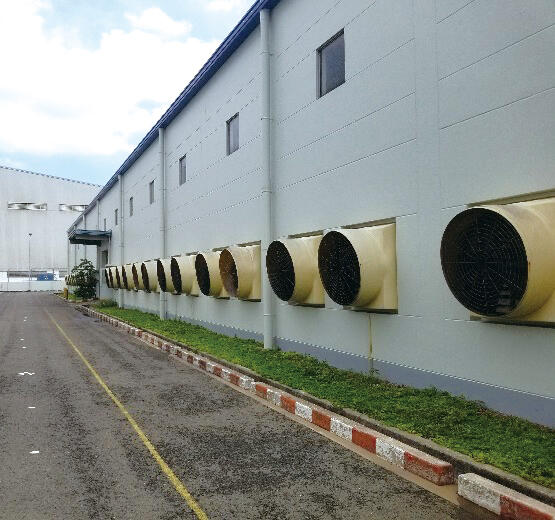
④ Energy Savings through Inverter Control of Cooling System Exhaust Fans (Vietnam: TVC)
The factory previously managed indoor temperature using water-cooled air-conditioning units with a total of 78 exhaust fans, operated by simple on/off switching. This system was upgraded to inverter control. Four exhaust fans are now controlled by a single inverter, and all exhaust fans have been converted to inverter-controlled operation. As a result, the system's electricity consumption was reduced by approximately 30%. (Scope 2: 49 t-CO₂ reduction)
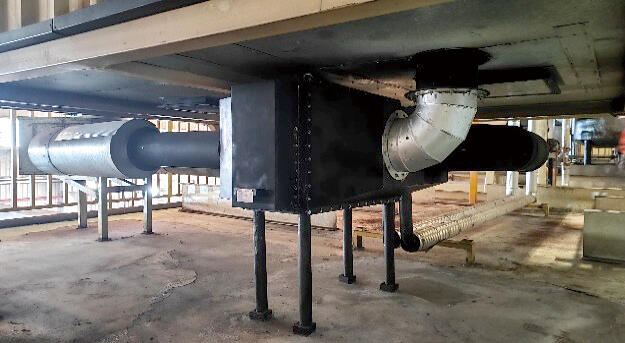
⑤ Waste Heat Recovery from Drying Furnaces and Boiler Upgrades (Brazil: KMB)
Processes using fossil fuels were mapped, and initiatives such as reducing fuel consumption and switching to alternative fuels were implemented. In the painting and drying processes, the aging boilers were replaced with the latest high-efficiency models, improving efficiency to approximately twice the previous level. In addition, waste heat of about 250°C from the drying furnaces was recovered through a heat exchanger and used to preheat the boiler feed water.Through these combined efforts, annual fuel consumption was reduced by approximately 27,702 m³ of natural gas and 15.6 tons of propane gas. (Scope 1: 162 t-CO₂ reduction, Scope 2: 520 t-CO₂ reduction)
⑥ Renewal of LED Lighting and Replacement with Energy-Efficient Air Conditioning Units (USA: KAC)
Although approximately 10 years ago the factory converted about 1,500 lighting units to LED, we have now updated them again to high‑efficiency LED fixtures equipped with motion sensors to further reduce energy consumption. In addition, several aging air‑conditioning units--requiring replacement due to U.S. environmental refrigerant regulations--are being upgraded under a multi‑year plan, with three units replaced in fiscal year 2024. (Scope 2: 282 t‑CO₂ reduction)
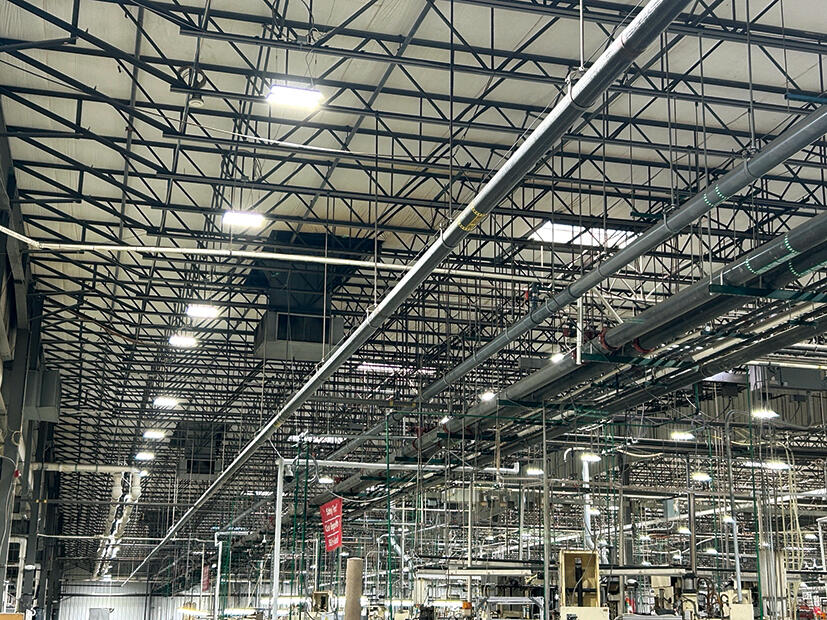
⑦ Activities to Reduce Electricity Consumption During Production (USA: TAC)
The production schedule was changed from seven days a week to five days a week, allowing equipment such as machine tools, compressors, heating and cooling systems, and lighting to be shut down for two days each week. Although daily production line adjustments according to the production plan can be challenging, these efforts resulted in an annual reduction of 240,152 kWh of electricity.